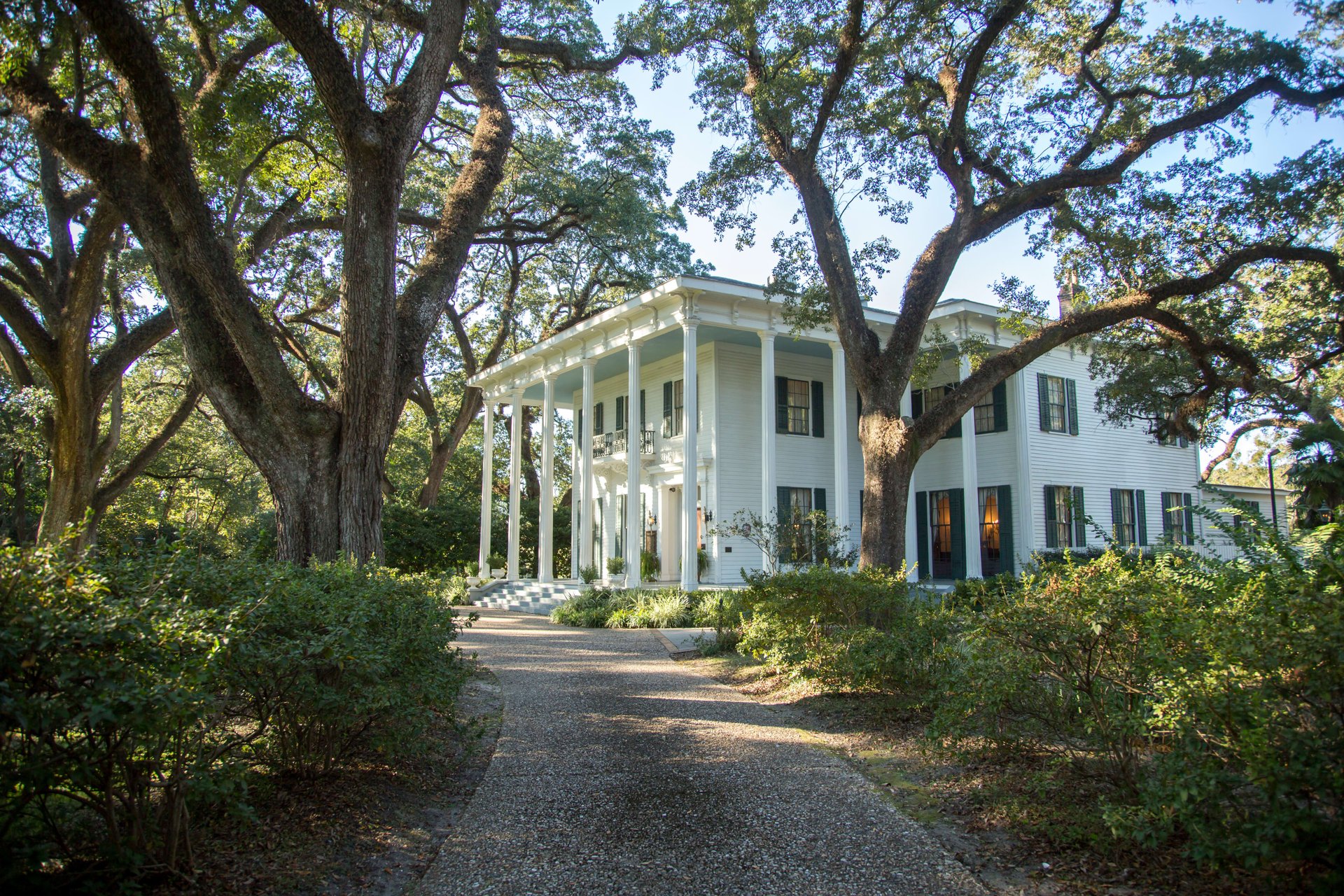
Belle Meade, TN Neighborhood Guide
Belle Meade is Nashville's most storied and sought-after residential address, an independent city-within-a-city where grand estates line tree-canopied boulevards, the Warner Parks stretch across 3,100 acres at the back door, and a sense of timeless Southern elegance persists through every decade of growth in the surrounding metro. It is small, only 3.1 square miles, exclusive, and entirely residential in character, yet just minutes from the full range of Nashville's cultural, culinary, and commercial life.
Its name comes from the French for "beautiful meadow," and the landscape delivers on that promise. The city traces its origins to the Belle Meade Plantation, established in 1807, which grew into one of America's most celebrated thoroughbred horse farms before its land was reimagined as an elegant planned suburb at the turn of the 20th century. The equestrian legacy, the historic mansion, and the architectural gravitas of the estates that replaced the plantation fields give Belle Meade a depth of identity that newer luxury communities simply cannot manufacture.
This guide covers the history, lifestyle, real estate market, schools, amenities, residential settings, and investment picture for Belle Meade, Tennessee.
| Key Facts: Belle Meade, TN | |
|---|---|
| County | Davidson County, Tennessee |
| City Status | Independent municipality within Nashville's metro area; its own mayor, city hall, and dedicated police force |
| Location | West Nashville, approximately 7–9 miles from downtown; bordered by Green Hills to the east, Sylvan Park to the north, and Percy Warner Park to the southwest |
| Population | Approximately 2,590–2,824 residents (2024 estimates); one of Nashville's most sparsely populated and highest-income municipalities |
| Area | 3.1 square miles (approximately 3.14 sq mi of land) |
| ZIP Codes | 37205 (primary), 37215 |
| Average Household Income | $217,200 (Homes.com); per capita income estimated at $172,162 (2023 Census data) |
| Founding | Plantation established 1807; city developed from 1906 onward under landscaper Ossian Cole Simonds; incorporated as independent city in the 20th century |
| Primary Roads | Belle Meade Boulevard, Harding Pike (Harding Place), Lynnwood Boulevard, and Woodmont Boulevard; access to I-440 within minutes |
| Parks & Green Space | Percy Warner Park and Edwin Warner Park (collectively 3,100+ acres); Parmer Park in the heart of Belle Meade; over 700 acres of parks and green space within city limits |
| Signature Attractions | Belle Meade Historic Site & Winery (former plantation mansion, guided tours, wine tastings); Cheekwood Estate & Gardens; Iroquois Steeplechase (annual spring horse race at Percy Warner Park); Belle Meade Country Club |
| School Options | Metro Nashville Public Schools (Julia Green Elementary, John Trotwood Moore Middle, Hillsboro High); premier private schools including Harpeth Hall, Montgomery Bell Academy, Ensworth, and St. Ann |
| Market Profile | Ultra-luxury residential market; median sale price approximately $2.65–$2.75 million (2025); active listings range from $765,000 to $23.8 million; all single-family, no condos or townhomes within city limits |
Belle Meade Lifestyle Snapshot
An editorial snapshot of the community's strongest lifestyle attributes, not a statistical ranking.
Community Overview
Belle Meade operates on its own terms. It is technically surrounded by Nashville's sprawl on every side, yet residents describe it as feeling entirely separate, a calm, residential enclave of broad lawns, mature canopy oaks, and stone-wall estates that seems to slow time the moment you pass its distinctive horse-and-foal street signs. The city's low density, just under 900 people per square mile, gives it a spaciousness that is nearly impossible to find this close to a major American city.
There are no apartments, no condos, and no townhomes within Belle Meade's city limits. Every residence is a single-family home, and the lots are generous. The architectural range is wide, from Georgian and Federal-style mansions on Belle Meade Boulevard to Tudor Revival cottages in the Belle Meade Links historic district, to stately brick Colonials and sleek contemporary renovations along Lynnwood Boulevard. What unifies them is quality, scale, and the unmistakable sense of a neighborhood that takes its character seriously.
Belle Meade is best for buyers who want Nashville's most prestigious residential address without sacrificing access to the city's world-class cultural, culinary, and professional landscape. It offers the quiet of a private enclave and the proximity of a central suburb, in equal measure.
History & Heritage
The story of Belle Meade begins in 1807, when John Harding purchased land near Richland Creek and named his estate "Belle Meade," from the French for "beautiful meadow." Over the following decades, the plantation grew to more than 5,200 acres under the management of his son, William Giles Harding, and evolved into one of the most celebrated thoroughbred horse breeding operations in the country. The stallion Bonnie Scotland, bred at Belle Meade, became one of the most influential sires in American racing history, with more than two-thirds of all Kentucky Derby winners ultimately tracing their lineage to his bloodline.
The plantation's mansion, built in the antebellum era and expanded over time, still stands on the grounds today. It serves as the Belle Meade Historic Site and Winery, open to the public for guided tours, wine tastings, private events, and seasonal programming. The property was listed on the National Register of Historic Places in 1969 and remains one of Nashville's most visited landmarks.
After the estate fell into financial difficulty, Jacob McGavock Dickinson (who later served as U.S. Secretary of War) purchased the mansion and approximately 2,200 acres in 1906. That same year, he co-founded the Belle Meade Land Company and hired renowned landscaper Ossian Cole Simonds to design a new residential community on the plantation's former fields. Simonds, influenced by the Garden City Movement, created Belle Meade as a planned suburb of curved streets, small parks, and gracious homes, a design philosophy still visible in the Belle Meade Links historic district, which was added to the National Register of Historic Places in 2004.
Belle Meade's equestrian heritage is not merely a historical footnote. It shapes the city's identity in tangible ways, from the horse-and-foal street signs to the annual Iroquois Steeplechase at Percy Warner Park, one of the oldest continuously running steeplechase events in the United States.
Map & Transportation
Belle Meade sits approximately 7 to 9 miles west of downtown Nashville, accessed primarily via Harding Pike (Highway 70S), which runs through the heart of the city. The I-440 interchange provides direct access to the rest of the metropolitan area. Most residents drive, and the car-dependent nature of the community reflects its residential character and the generous lot sizes that spread homes across quiet internal streets. That said, Belle Meade is close enough to Nashville's core that a morning commute or evening dinner downtown is a routine, manageable trip.
| Destination | Approximate Distance / Time | Route |
|---|---|---|
| Downtown Nashville | 7–9 miles / 15–25 min | Harding Pike east to West End Avenue, or I-440 east to I-40 toward downtown |
| The Mall at Green Hills | ~2 miles / 5–8 min | Harding Pike east to Hillsboro Pike; designer retail and anchored shopping |
| Nashville International Airport (BNA) | ~15 miles / 25–35 min | I-440 east to I-40 east; straightforward interstate routing |
| Percy Warner Park (main entrance) | ~0.5 mile / 2–3 min | Belle Meade Boulevard southwest to park entrance at the end of the boulevard |
| Cheekwood Estate & Gardens | ~1.5 miles / 5 min | Page Road west from Belle Meade; adjacent to Percy Warner Park |
| Belle Meade Historic Site & Winery | Within city limits / 3–5 min | Harding Pike; located within Belle Meade's boundary |
| Vanderbilt University / Medical Center | ~5 miles / 10–15 min | Harding Pike east to West End Avenue; also accessible via 21st Avenue South |
| Radnor Lake State Park | ~5 miles / 10–12 min | Hillsboro Pike south to Otter Creek Road; popular for wildlife and trail running |
| Green Hills / Hillsboro Village dining | ~2–3 miles / 5–8 min | Harding Pike east; adjacent neighborhood corridors with full retail and dining |
| Nashville's 12 South / Gulch | ~5–7 miles / 12–18 min | Hillsboro Pike north or I-440 east toward city center |
Belle Meade's location at the western edge of Nashville's inner ring means residents are insulated from downtown density and traffic patterns while remaining well-connected. The I-440 interchange gives the community direct freeway access to the airport, Vanderbilt, and the broader metro without routing through city surface streets.
Real Estate Market Trends
Belle Meade's real estate market is defined by scarcity, prestige, and consistent long-term appreciation. Based on 93 transactions from 2024 to 2025, the average Belle Meade sale price was approximately $3,035,875, with a median of $2,650,000. The median sale price increased 7.3% from $2,562,500 in 2024 to $2,750,000 in 2025, demonstrating steady upward momentum even as broader Nashville-area markets moderated after the pandemic surge. Current active listings span from $765,000 to $23.8 million, reflecting the full spectrum from more modest Belle Meade entry points to landmark estate properties.
The ultra-luxury segment, comprising properties above $4 million, has averaged $6,027,875 per transaction, with trophy properties on prestige streets routinely exceeding $1,000 per square foot. At the same time, core market homes in the $1.5 to $4 million range offer buyers architecturally significant properties with genuine lot sizes at a price point that is meaningfully below comparable estates in coastal markets.
| Property Segment | Market Character | Buyer Consideration |
|---|---|---|
| Entry-level Belle Meade (under $1.5M) | Smaller homes and renovation candidates; the most accessible price point in the city; averages approximately $965,000; rare and moves quickly when available | Strong renovation upside given the address; buyers should evaluate lot size, condition, and rebuild potential carefully before committing |
| Core market ($1.5M–$4M) | The broadest and most active segment; well-appointed homes averaging approximately $2.57 million; architectural variety across Colonial, Tudor, Georgian, and contemporary styles | Most buyers at this level are purchasing a finished, move-in-ready home; condition, kitchen quality, primary suite, and lot character matter most for resale |
| Ultra-luxury (above $4M) | Trophy estates, landmark properties, and custom-built modern mansions; 20 transactions in the 2024–2025 dataset averaged $6,027,875; premier streets command $1,000+ per sq ft | These properties are individually priced and often spend extended time on market; architectural significance, acreage, privacy, and street address drive valuation more than square footage alone |
| Historic properties | Several Belle Meade homes are listed on the National Register of Historic Places, particularly in the Belle Meade Links district; they carry unique character and restrictions | Buyers should review historic designation status, deed covenants, and any improvement restrictions before purchase; these homes require architects experienced in historic preservation |
| New construction & major renovations | Custom-built contemporary and transitional homes have proliferated on Belle Meade's prestige streets; the market supports both preservation and bold new architecture at the highest price tiers | Verify compliance with Belle Meade's city building standards and any applicable architectural covenants; construction timelines in this market can run 18–24 months |
The strongest Belle Meade properties tend to have a clear story: a prestigious street address, architectural distinction, a generous and private lot, and condition that requires no immediate investment from the buyer. Because inventory is limited and comparable sales can be months apart, pricing requires careful market analysis rather than broad regional comparisons.
Belle Meade's pricing is supported by permanent scarcity. The city is landlocked, all-residential, and incapable of densification. That structural constraint, combined with Nashville's continued growth as a major American city, creates a compelling long-term case for properties at every price point within its borders.
Lifestyle
Life in Belle Meade centers on privacy, leisure, and the particular pleasures of living at the edge of one of America's great urban parks. The Warner Parks, which begin at the end of Belle Meade Boulevard, offer miles of trail for morning runs, equestrian rides, mountain biking, and family outings without a car journey. The Belle Meade Country Club provides golf, tennis, swimming, and a social calendar for those who belong. And the surrounding Green Hills and Hillsboro corridors supply the restaurants, specialty grocery stores, and boutiques that fill in the daily routine.
Percy & Edwin Warner Parks
More than 3,100 acres of forest, fields, golf courses, hiking trails, equestrian paths, and scenic overlooks sit directly adjacent to Belle Meade's southwestern boundary. The Iroquois Steeplechase, one of the country's oldest horse races, is held here each spring and draws the entire city.
Belle Meade Historic Site & Winery
The antebellum plantation mansion at the heart of Belle Meade's history is now a public museum, winery, and event venue. Guided tours, wine tastings, bourbon experiences, and seasonal programming draw visitors and serve as a gathering place for the community throughout the year.
Belle Meade Country Club
A members-only institution with golf, tennis, swimming, and dining, the Country Club has been a social anchor of the community since its founding in 1901 on the original plantation land. Membership is coveted and carries its own waiting list.
Cheekwood Estate & Gardens
Adjacent to the Warner Parks, Cheekwood is a 55-acre botanical garden and art museum housed in a stunning Georgian-style mansion. Rotating exhibitions, seasonal garden installations, and the beloved Cheekwood in Bloom events draw residents throughout the year.
Dining & Local Character
Sperry's Restaurant has been a Belle Meade dining institution for 50 years, known for prime steaks and tableside bananas foster. Belle Meade Meat and Three, Le Peep, and Fox Run Cafe add casual warmth alongside the fine dining options on and around Harding Pike.
Radnor Lake State Park
A short drive south, Radnor Lake offers 1,332 acres of natural area with peaceful waterside trails, wildlife viewing, and shaded woodland paths. It serves as Belle Meade's quieter, more contemplative outdoor counterpoint to the active energy of the Warner Parks.
Amenities
Belle Meade itself is almost entirely residential, which is part of its appeal. The commercial activity that supports daily life is concentrated along Harding Pike and in the adjacent Green Hills and Hillsboro Village corridors, within minutes of any Belle Meade address. Residents describe the tradeoff as entirely favorable: no retail clutter within city limits, maximum quiet and privacy at home, and a complete array of urban services within a five-minute drive in any direction.
| Category | What's Available |
|---|---|
| Grocery & Everyday Shopping | Whole Foods, Harris Teeter, Trader Joe's, and specialty grocers in the Green Hills and Hillsboro corridors; all within 2–5 miles; The Mall at Green Hills adds department stores and anchored retail nearby |
| Dining | Sperry's Restaurant (50-year neighborhood institution; prime steaks and tableside classics); Belle Meade Meat and Three; Le Peep; Fox Run Cafe; full range of Green Hills dining within minutes; downtown Nashville accessible in 20–25 min |
| Parks & Recreation | Percy and Edwin Warner Parks (3,100+ acres; hiking, equestrian, golf, picnic areas, Iroquois Steeplechase); Cheekwood Estate & Gardens; Radnor Lake State Park; Parmer Park within city limits (playgrounds, basketball, picnic tables) |
| Golf | Belle Meade Country Club (private, members-only); Harpeth Hills Golf Course and Percy Warner Golf Course within the Warner Parks; Hillwood Country Club nearby |
| Healthcare | Vanderbilt University Medical Center (~5 miles); Saint Thomas West Hospital within the corridor; extensive specialty practices, concierge medicine providers, and dental offices throughout West Nashville |
| Arts & Culture | Cheekwood Estate & Gardens (rotating art exhibitions and botanical programming); Belle Meade Historic Site (mansion tours, winery, events); downtown Nashville's Grand Ole Opry, Country Music Hall of Fame, Ryman Auditorium, and Frist Art Museum within 15–20 minutes |
| Fitness & Wellness | Iron Tribe Fitness, Nashville Yoga, and boutique studios in the Harding Pike and Green Hills corridors; Warner Parks trails used daily by runners, cyclists, and equestrians |
| Shopping | The Mall at Green Hills (Saks Fifth Avenue, Tiffany & Co., Apple Store, and designer retail anchors); Hill Center and Green Hills specialty boutiques; Hillsboro Village independent shops and galleries |
Belle Meade's amenity model is the inverse of most luxury neighborhoods: no commercial clutter within city limits, maximum residential privacy at home, and an exceptional range of dining, parks, culture, and retail within a five-minute drive. Residents consistently describe it as getting the best of both worlds.
Residential Streets & Settings
Belle Meade is best understood street by street. The community's topography, tree canopy, and lot configurations vary meaningfully across its internal roads, and different streets carry different architectural characters and lifestyle profiles. A buyer drawn to a historic Tudor cottage has a different target address than one seeking a modern estate with a pool and tennis court.
Belle Meade Boulevard
The signature street. Lined with grand estates behind stone walls and magnolia trees, it runs directly to the entrance of Percy Warner Park. Properties here are among the most architecturally significant in Nashville and carry the community's highest prestige profile.
Lynnwood Boulevard
Lynnwood features luxurious properties on generous lots, with a mix of stately traditional architecture and newer custom construction. It is one of Belle Meade's most actively traded streets and appeals to buyers seeking both space and modernity.
Harding Place
Lined with historic homes and mature tree canopy, Harding Place carries a quieter, more residential feel. Its tree-lined streetscape and proximity to everyday conveniences on Harding Pike make it a practical as well as beautiful address.
Belle Meade Links District
Dating from 1915, this 149-property historic district was designed in the Garden City tradition with curved streets and Tudor Revival cottages. It is on the National Register of Historic Places and represents one of Nashville's few surviving planned early-suburban environments.
Woodmont Boulevard & Northern Edge
The northern boundary streets offer homes with strong access to the Green Hills corridor and Hillsboro Village. Properties here tend toward the core market price range and attract buyers who want the Belle Meade address with the most direct reach to everyday Nashville life.
Estate Parcels & Wooded Interiors
Several of Belle Meade's interior streets carry larger parcels with significant tree coverage, pool settings, and private motor courts. These properties attract buyers who prioritize retreat-like seclusion over boulevard frontage and often represent the city's best opportunities for custom renovation.
| Area / Street | Character | Best For |
|---|---|---|
| Belle Meade Boulevard | Grand estates, stone walls, magnolia-lined approach to Percy Warner Park; Nashville's most prestigious residential corridor | Buyers seeking the community's most iconic address and architectural significance |
| Lynnwood Boulevard | Generous lots, mix of traditional and contemporary construction, active resale market | Buyers who want space, modernity, and strong long-term resale value |
| Harding Place | Historic homes, tree-lined streetscape, residential quiet with Harding Pike convenience | Buyers who value historic character and everyday accessibility |
| Belle Meade Links District | National Register historic district; 1915 planned community; Tudor Revival cottages on curved streets | Buyers drawn to historic preservation, architectural character, and Garden City design |
| Woodmont Boulevard edge | Core market pricing, strong Green Hills proximity, practical Nashville access | Buyers entering the Belle Meade market or prioritizing proximity to Green Hills retail |
Schools
Belle Meade is served by Metro Nashville Public Schools for its public education pathway, with Julia Green Elementary considered among the most sought-after public elementary schools in the district. The city's private school landscape is one of the strongest in the Southeast, and for many Belle Meade families, the proximity to institutions like Harpeth Hall, Montgomery Bell Academy, and Ensworth is as much a reason to live here as the homes themselves.
| School | Type / Grades | Notes |
|---|---|---|
| Julia Green Elementary School | Public elementary; Metro Nashville Public Schools | The most sought-after public elementary option for Belle Meade families; Niche grade A–; student-teacher ratio approximately 15:1; strong academic culture and active parent community |
| John Trotwood Moore Middle School | Public middle school; Metro Nashville Public Schools | Serves the Belle Meade area; Niche grade B+; student-teacher ratio approximately 19:1; well-regarded within the Nashville public school system |
| Hillsboro Comprehensive High School | Public high school; Metro Nashville Public Schools | Serves the Belle Meade and Green Hills corridor; strong academic and extracurricular offerings within the Metro Nashville district |
| Harpeth Hall School | Private; girls' school, grades 5–12 | One of Tennessee's most distinguished private schools; located approximately 2 miles from Belle Meade; college preparation emphasis, strong arts and athletics programs |
| Montgomery Bell Academy (MBA) | Private; boys' school, grades 9–12 | A prestigious all-boys preparatory school with rigorous academics and nationally recognized debate and athletics programs; nearby on Harding Pike |
| Ensworth School | Private; preK–12 | Highly regarded independent school serving students from early childhood through high school; located in West Nashville near Belle Meade; Niche A+ rating |
| St. Ann School | Private Catholic; preK–8 | Niche A+ rating; student-teacher ratio approximately 10:1; among the top-rated Catholic schools in Nashville; located within easy reach of Belle Meade |
| Harding Academy | Private; preK–12 | Christian school just north of Belle Meade's border on Harding Pike; popular with families seeking a faith-based education in close proximity |
Belle Meade's concentration of elite private school options within a 2–4 mile radius is one of the community's most compelling lifestyle advantages for families. Many buyers cite school access as a primary factor in their decision, and the combination of Julia Green Elementary in the public system and multiple top-ranked private institutions gives families a range of credible educational paths from a single address.
The private school corridor adjacent to Belle Meade, anchored by Harpeth Hall, Montgomery Bell Academy, Ensworth, and St. Ann, is widely considered one of the strongest concentrations of independent school options in the American South. For families with school-age children, this is among Belle Meade's most durable lifestyle assets.
Investment Potential
Belle Meade's investment case is among the clearest of any residential community in Tennessee. The city is physically incapable of densification: it is landlocked, all-residential by charter, and has no undeveloped land to speak of. Every home that comes to market is replacing one that sold to a previous owner. That supply constraint, combined with Nashville's continued ascent as a major national city, creates permanent upward pressure on values.
| Market Snapshot | |
|---|---|
| Median sale price (2025) | $2,750,000; up 7.3% from $2,562,500 in 2024 |
| Average sale price | $3,035,875 across 93 transactions, 2024–2025 |
| Transaction volume growth | 55 sales in 2025 vs. 38 in 2024; strong demand signal |
| Average price per sq ft | $659 overall; $906 for ultra-luxury; $1,000+ on premier streets |
| 2026 price projection | Median of $2.8M–$3.0M based on current trajectory |
| Investment Fundamentals | |
|---|---|
| Primary value driver | Structural scarcity in a growing major metro; no new supply possible within city limits |
| Buyer profile | Nashville executives, healthcare and legal professionals, out-of-state relocators, legacy Nashville families, and high-net-worth second-home buyers |
| Rental potential | Limited by the residential character and community norms; Belle Meade is overwhelmingly owner-occupied (85%); short-term rentals are rare and culturally atypical |
| Supply profile | Very limited inventory; typically 18–26 active listings at any time; fewer than 60 transactions per year across the entire city |
| Long-term appeal | Nashville growth, private school ecosystem, Warner Parks adjacency, historic identity, and an owner base that actively maintains property values |
Nashville's growth as a hub for healthcare (Vanderbilt, HCA Healthcare headquarters), finance, music, and technology continues to produce a pipeline of high-net-worth buyers seeking Belle Meade-caliber residential addresses. The city's per capita income of $172,162 and 85.6% college-educated resident base reflect an owner demographic that is deeply invested in maintaining the community's standards, which itself is a compounding form of value protection over time.
For buyers considering a long-term purchase, Belle Meade is less about market timing and more about owning one of a finite number of assets in a city that cannot grow outward. Nashville will add people, employers, and cultural gravity for decades. The number of homes in Belle Meade will remain essentially fixed. That math is simple and durable.
Relocation Teaser
Belle Meade draws buyers who have reached a point in their lives where quality of place matters as much as any financial calculus. They want a home that reflects who they are, in a neighborhood that holds its identity over time, close to the city's best schools and parks and restaurants, but removed from the noise and density of urban living. It is a neighborhood for people who have considered their options carefully and arrived at the same address.
For Nashville Executives
Vanderbilt Medical Center, HCA Healthcare headquarters, and downtown Nashville's financial district are all within 15–25 minutes. Belle Meade offers the residential address and community infrastructure that Nashville's senior professional class has chosen for generations.
For Families
The combination of Julia Green Elementary in the public system and Harpeth Hall, MBA, Ensworth, and St. Ann within a few miles makes Belle Meade one of the most complete family destinations in the South. The Warner Parks add 3,100 acres of outdoor space for the years between school drop-off and dinner.
For Outdoor Enthusiasts
Percy and Edwin Warner Parks offer miles of hiking, mountain biking, equestrian trails, golf, and picnic areas directly accessible from Belle Meade Boulevard. The Iroquois Steeplechase, Radnor Lake, and Cheekwood's gardens round out a natural recreation landscape that is exceptional for a city of Nashville's size.
For Out-of-State Relocators
Nashville's growth has drawn buyers from Los Angeles, New York, Chicago, and Florida who recognize that Belle Meade's combination of Southern elegance, privacy, strong schools, and major-city access at a fraction of coastal luxury pricing is a genuinely rare find in today's market.
For History & Architecture Lovers
Multiple National Register properties, a 200-year-old plantation mansion open for tours, the Garden City-designed Belle Meade Links district, and decades of architecturally significant custom construction give Belle Meade a depth of character that newer luxury communities simply cannot replicate.
For Long-Term Owners
Belle Meade's fixed supply, Nashville's continued growth, the private school ecosystem, and an owner community deeply committed to preserving the city's standards combine to make it one of the most structurally sound long-term real estate positions in Tennessee.
Frequently Asked Questions
Is Belle Meade its own city or part of Nashville?
Belle Meade is an independent municipality within Davidson County, with its own mayor, city hall, and dedicated police force. It operates separately from Metro Nashville government for most local services while existing within the broader Nashville metropolitan area. Residents address mail and pay Davidson County taxes but interact with Belle Meade's own city government for zoning, permitting, and policing.
What is the history behind Belle Meade?
Belle Meade takes its name from the Belle Meade Plantation, established in 1807 by John Harding. The plantation grew to more than 5,200 acres and became one of America's most celebrated thoroughbred horse breeding operations, producing bloodlines that shaped American racing. The estate fell into financial difficulty after the Civil War and was sold in 1906, when the land was redesigned as a planned residential suburb by landscaper Ossian Cole Simonds. The original plantation mansion still stands and operates today as the Belle Meade Historic Site and Winery.
Are there condos or townhomes available in Belle Meade?
No. Belle Meade is an exclusively single-family residential community. There are no condominiums, townhomes, or apartment buildings within the city limits. Every residence is a detached single-family home on its own lot, which is one of the defining characteristics of the community's residential identity.
What are home prices like in Belle Meade?
Based on 93 transactions from 2024 to 2025, the average Belle Meade sale price was approximately $3,035,875, with a median of $2,650,000. The median price rose 7.3% from $2,562,500 in 2024 to $2,750,000 in 2025. Active listings currently range from $765,000 to $23.8 million. Entry-level properties under $1.5 million are rare and average approximately $965,000. Ultra-luxury properties above $4 million average $6.03 million per transaction.
What schools serve Belle Meade?
The public school pathway runs through Julia Green Elementary, John Trotwood Moore Middle School, and Hillsboro Comprehensive High School, all part of Metro Nashville Public Schools. The surrounding area is home to some of the South's most prestigious private schools, including Harpeth Hall, Montgomery Bell Academy, Ensworth, St. Ann, and Harding Academy, all within a few miles of any Belle Meade address.
How far is Belle Meade from downtown Nashville?
Belle Meade is approximately 7 to 9 miles from downtown Nashville. Most residents reach downtown in 15 to 25 minutes via Harding Pike east or I-440. The Green Hills shopping and dining corridor is just 2 miles away and accessible in under 10 minutes.
What is the Iroquois Steeplechase?
The Iroquois Steeplechase is one of the oldest continuously running steeplechase races in the United States, held annually in May at Percy Warner Park, directly adjacent to Belle Meade. The event draws visitors from across the country and serves as one of Nashville's most celebrated spring traditions. Named after Iroquois, the first American-bred horse to win England's Epsom Derby, it has deep roots in the equestrian culture that Belle Meade's plantation heritage helped establish in the region.
Who is Belle Meade best suited for?
Belle Meade is best suited for buyers who want Nashville's most prestigious residential address, whether they are established Nashville families, executive-level professionals relocating from other markets, or buyers seeking a long-term asset in a community with permanent supply constraints and durable appreciation. It is a particularly strong match for families with school-age children, buyers who value proximity to the Warner Parks and natural landscape, and anyone who wants the quiet of a private enclave within easy reach of a vibrant major city.